
Identify the quantity before comparing numbers
Sound power describes the acoustic emission of the source under the stated conditions. Sound pressure describes a level at a particular position and is affected by distance and the environment. Both can be reported in decibels, so the unit alone does not make them interchangeable.
Check the weighting, measurement method and any declared uncertainty. A value measured beside the tool cannot be directly compared with one measured inside a carrier cab. Likewise, an instantaneous reading and an exposure assessment covering a work shift answer different questions.
A quotation stating a sound power level and a site report stating sound pressure near a building cannot establish a product difference by simple subtraction. They describe different quantities and conditions. Ask for like-for-like product information, then assess how the selected configuration affects the actual site. Where a customer has a specified limit, clarify whether it concerns equipment emissions, an operator position, a property boundary or an exposure period before evaluating compliance.
The workpiece and surroundings matter
The breaker, carrier and struck material contribute to the acoustic environment. A confined work area or reflecting wall can change the noise reaching people. Changing the material, operating configuration or measurement position can therefore change a reading without any product modification.
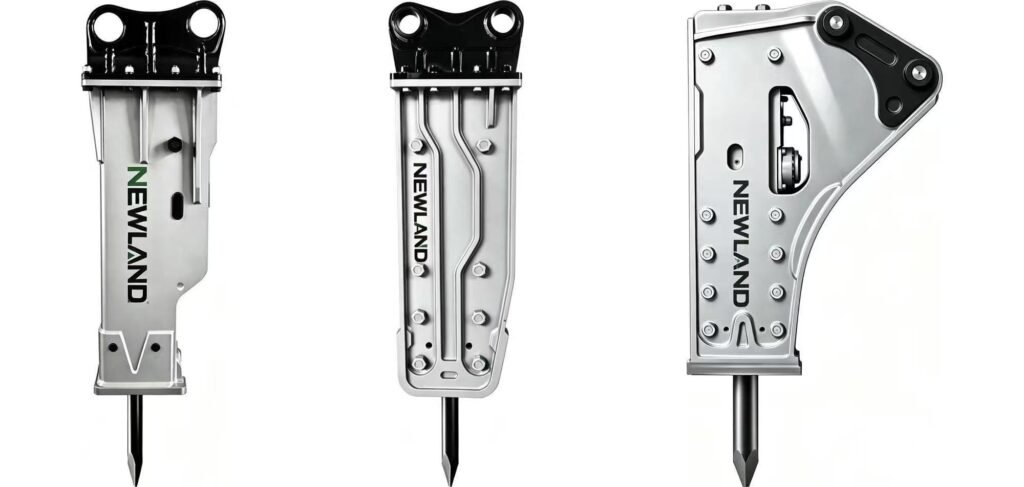
Housing and isolation arrangements may reduce some noise paths, but they do not remove every impact source. Do not assign a universal decibel reduction to a box-type housing or assume that a quieter recording demonstrates a tested acoustic advantage.
| Information | Why buyers need it |
|---|---|
| Sound power or sound pressure | Establishes which acoustic quantity is reported |
| Measurement position and setup | Makes the comparison meaningful |
| Test method and operating conditions | Shows how the figure was obtained |
| Uncertainty or declared basis | Clarifies the interpretation of the stated value |
| Site exposure assessment | Addresses actual people, duration and surroundings |
Ask for useful product evidence
For procurement, request the available noise information for the exact proposed breaker and configuration. Where a project has a noise requirement, give the supplier the required metric and acceptance method. A request simply saying below a particular dB value is incomplete without that context.
Keep the test information with the product documents rather than substituting an unsupported marketing label. NEWLAND can review the required configuration and documentation scope, but a model-specific noise value must come from its corresponding evidence, not from a generic breaker category.
Plan controls for the real workplace
A site assessment should consider source control, separation, barriers where appropriate, cab condition and the work schedule. Personal hearing protection is part of the planned control system, not proof that the noise problem has been resolved. Nearby workers may have a different exposure from the operator.
Use suitable instruments and competent assessment for acceptance or exposure decisions. Phone audio and uncalibrated recordings can help describe an unusual sound but cannot replace the required noise measurement. Reassess when the work area, equipment condition or operating method changes materially.
Related products and guides
Hydraulic Breaker Unusual Noise: What to Record for a Technical Review
Box Type Hydraulic Breakers
Hydraulic Breaker Worksite Safety: Planning, Exposure and Stop Conditions
How Does a Hydraulic Breaker Work? Main Components and the Impact Cycle
Hydraulic Breaker Impact, Power and Specification Terms Explained
Resources