
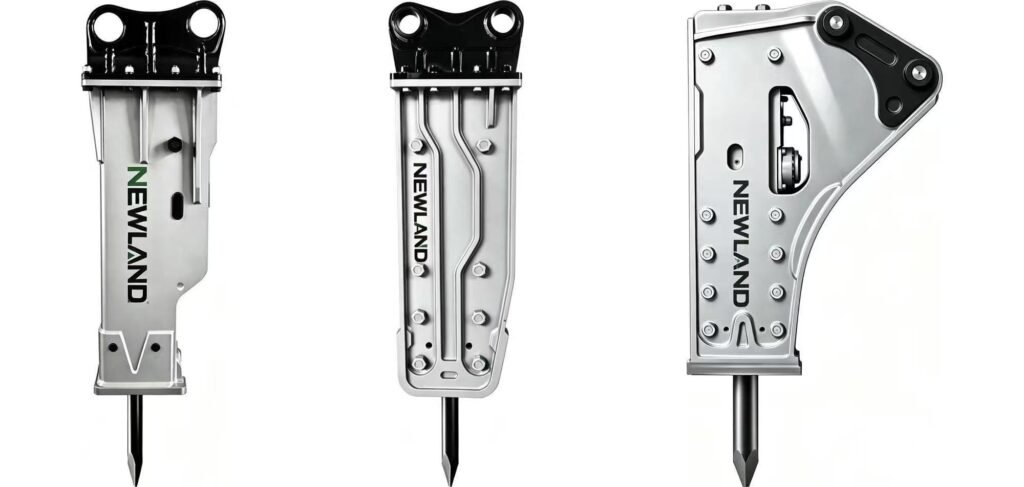
Separate the life of the breaker from its wear parts
The working tool, bushings, retainers, seals and main assemblies have different duties and replacement criteria. Renewing a correctly identified wear part does not mean the entire breaker has reached the end of its life. Equally, a sound-looking housing does not establish that the internal components remain serviceable.
Track service events by component. Record why a part was removed and the inspection findings, not only that a new part was fitted. This helps distinguish planned wear replacement from repeated failures caused by an unresolved operating or system problem.
Several mechanisms can accelerate wear
Abrasive material at a sliding interface can damage the surfaces. Insufficient or unsuitable lubrication can affect the tool and guide interface. Side loading changes the load path, while contamination or unsuitable hydraulic conditions can affect precision internals and sealing.
These influences can interact. A worn guide may allow abnormal tool motion, and continued operation can then affect other parts. A simple service-hour total cannot explain the condition without considering the application, maintenance and observed changes.
| Record | What it helps distinguish |
|---|---|
| Hours and work type | Duty history rather than calendar age alone |
| Tool and guide measurements | Condition trend against the actual service criteria |
| Lubrication and fluid history | Whether specified care and hydraulic conditions were maintained |
| Failure location and findings | Normal wear versus a recurring damage mechanism |
| Configuration changes | Effects of new carriers, tools, couplers or settings |
Use trends instead of invented intervals
Follow the inspection and maintenance intervals supplied for the actual model and duty. Where measurements are required, use the specified locations and acceptance limits. A trend of increasing clearance or repeated leakage can help plan maintenance before a breakdown, but only when the measurements are comparable.
Do not replace every component on a schedule copied from an unrelated breaker. Nor should a part be kept in use merely because it has not reached a claimed number of hours. Cracks, insecure retention and abnormal behavior require action regardless of age.
Two attachments with the same recorded hours may have done very different work. One may have had controlled contact and planned guide replacement, while the other experienced repeated side loading or unresolved contamination. That difference is why a useful history includes the task and condition findings. It also explains why a supplier should not turn a general lifespan claim into a replacement interval for an individual piston, seal or tool without the required inspection basis.
Make replacement part of a wider decision
Before ordering, identify the component reference and inspect the affected mating parts. A damaged piston and cylinder may require a broader assessment than one inexpensive replacement item. The cost comparison should include the required corrective work and the likelihood of addressing the actual failure cause.
NEWLAND can review a defined new breaker or replacement-parts requirement. A reliable inquiry states the current condition and application rather than asking for a guaranteed lifetime. Continued service, repair or complete replacement should follow the technical findings, the approved repair options and the buyer’s production requirements.
Related products and guides
Hydraulic Breaker Maintenance Records: A Practical Checklist
Hydraulic Breaker Repair or Replacement: Decide the Scope Before Ordering Parts
Breaker Bushings, Retaining Pins and Through Bolts: Which Part Are You Requesting?
Hydraulic Breaker Gas and Nitrogen: What to Confirm Before Charging
Hydraulic Breaker Storage: Preparing for Inactivity and Return to Work