
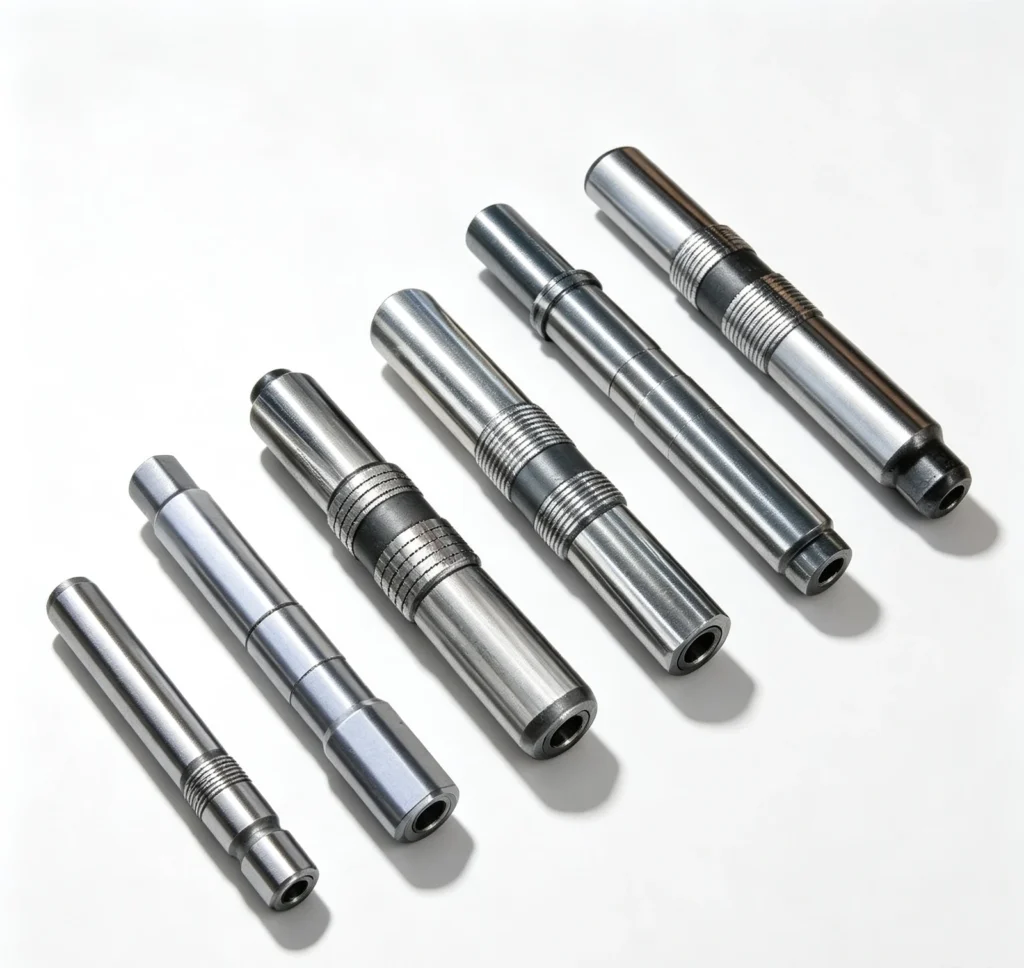
Locate the damage before naming the cause
A sliding-surface score, a chipped impact end and damage around a hydraulic feature should not be grouped as one generic piston failure. Identify the affected feature and preserve its orientation in the assembly record. The pattern can help determine which mating surfaces and operating conditions require examination.
Surface appearance alone cannot establish a material defect, incorrect clearance or a particular hydraulic setting. Technical assessment may require measurements, a closer examination and the corresponding service history. Avoid grinding a mark away before determining whether the component can be repaired at all.
Sliding surfaces and impact surfaces have different duties
The piston must move with the intended relationship to the cylinder and any relevant guides or sealing features. Surface damage can alter that relationship or contribute debris to the system. The impact end must also contact the correct tool interface as the design intends.
A tool mismatch or damaged mating surface can create an impact-interface problem even if the piston’s nominal diameter is correct. Conversely, an apparently intact impact end does not establish that the sliding and control features remain within specification.
| Damage area | Related components or conditions to assess |
|---|---|
| Sliding lands or guided surfaces | Cylinder condition, fit and contamination findings |
| Impact end | Working-tool geometry, contact and related damage |
| Edges or hydraulic features | Correct part revision and the associated mating interfaces |
| Widespread transferred or scored material | Condition of both surfaces and the wider fluid circuit |
Decide whether the mating assembly remains serviceable
The cylinder should be assessed for scoring, local damage, shape and required dimensional condition under the applicable procedure. A new piston fitted into an unacceptable bore can be damaged again. The reverse also applies: replacing the cylinder alone may leave a damaged piston in the new assembly.
Where debris or a seizure is involved, the technical repair scope should address the wider hydraulic path as required. Contamination control is a separate task from supplying a precision replacement. A clean-looking exterior cannot establish that internal fluid passages and connected components are ready.
For example, a replacement piston quotation may look straightforward until inspection reveals corresponding cylinder damage. The decision then changes from identifying one part to defining a serviceable mating assembly. Keep the supply decision open until that condition is established. If a technician determines that the cylinder can be retained, preserve the acceptance basis with the order so that the new piston is not supplied against an assumed or unverified bore condition.
Order by reference and verified geometry
Confirm the breaker identification, piston reference, revision and assembly scope. Overall length and one diameter are insufficient because shoulders, lands, transitions and working interfaces can differ. Measurements taken from a worn part should be labeled as actual findings, not presented as the original manufacturing dimensions.
NEWLAND can review a specified piston or related assembly request. State whether the technical decision is a piston-only replacement or a broader matched scope, and retain the inspection findings. Final installation and return-to-work acceptance must use the correct service requirements, including the approved condition of all mating components.