
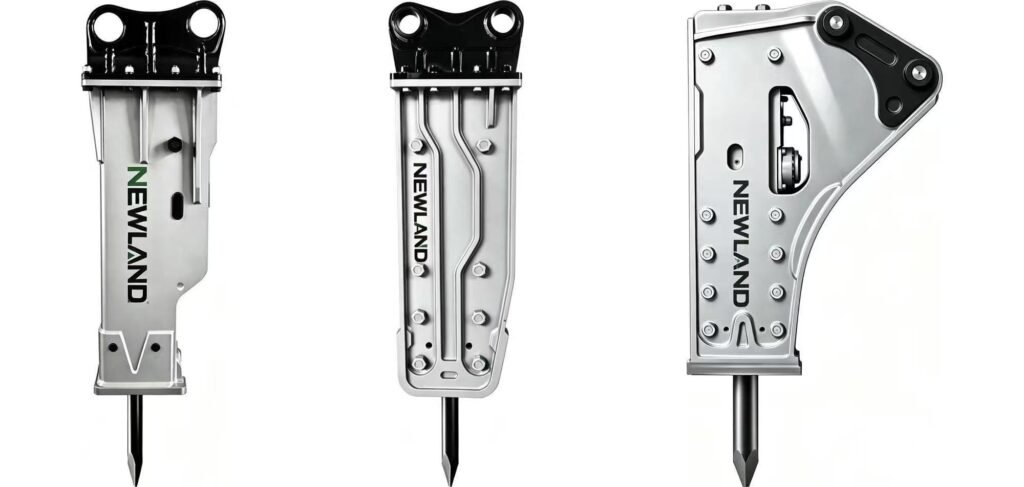
Separate the core design from optional equipment
Terms such as hydraulic and gas-assisted describe broad aspects of a breaker design, but they do not provide a complete circuit or service specification. The role of any gas chamber or accumulator must be identified from the actual model information.
Housing style is another configuration choice. A box-type enclosure changes the external arrangement and may incorporate isolation components, but its name does not prove a particular noise reduction or impact output. Compare documented performance and the full installed configuration.
Protection features still have operating limits
A blank-firing prevention feature is intended to influence behavior when the tool is not in its required working condition. Its activation and limits depend on the design. It does not make deliberate firing without proper contact or prying with the tool an acceptable operating method.
Other advertised control features should be explained in the same way: what condition they address, how the operator recognises their status and what the instructions require. Avoid treating a general feature label as evidence that every operating error or damage mode is prevented.
| Option or design area | Question before selection |
|---|---|
| Impact-cycle design | What are the model-specific hydraulic and gas requirements? |
| Housing and isolation | Which components are included and what evidence supports claims? |
| Blank-firing protection | What operating condition and limits does the feature address? |
| Automatic lubrication | Which lubricant, delivery arrangement and monitoring are required? |
| Underwater or special-condition package | What additional configuration and operating requirements apply? |
Automatic lubrication is a system, not a maintenance waiver
An automatic lubrication arrangement needs the specified lubricant, supply condition and delivery configuration. Its presence does not establish that lubricant is reaching the required interface in the correct way. Operators and maintenance personnel still need the prescribed checks and response to an interruption.
Confirm whether the quoted system includes the necessary components for the actual breaker and carrier arrangement. Mixing an unverified lubricant, pump or connection can change the intended performance. The product scope should identify what is supplied and what the installation needs.
Special conditions need a defined package
Underwater work, unusual temperatures and other special applications may require additional provisions. A standard breaker should not be treated as suitable simply because the working tool can reach the location. The environment, exposure and operating method need to be supplied for technical review.
For a NEWLAND inquiry, describe the job and ask the quotation to identify the exact features and included parts. Confirm the required documents and maintenance implications at the same time. A useful option solves an established requirement; it should not be selected from an unsupported claim of universal productivity, life or protection.
For example, a buyer comparing two offers may find automatic lubrication included on one and quoted separately on the other. Compare the final package, lubricant requirements and installation responsibilities before judging the price difference. Likewise, an underwater description needs a defined operating package and limitations rather than an assumption that an enclosure makes a breaker suitable for submersion. Record each agreed option against the actual model so that optional capability is not mistaken for standard equipment.