Start with the breaker identity
A hydraulic breaker chisel inquiry needs to identify both the breaker and its working tool. Begin with a readable photograph of the breaker nameplate, showing the manufacturer, full model, serial number and version where available. Add any stamped tool number, previous order reference or parts-list reference without shortening the characters.
Keep the breaker details and tool details in separate fields. If several breakers or several tools are involved, give each item a reference such as Tool A or Tool B. Use those references on the photographs and inquiry lines so that a measurement from one item is not accidentally assigned to another.
If the plate is missing or unreadable, say so. Include the information you can verify and mark the rest as unknown. For an inquiry involving several components, use the broader breaker parts identification checklist alongside this tool-specific guide.
Send photographs that show the connection features
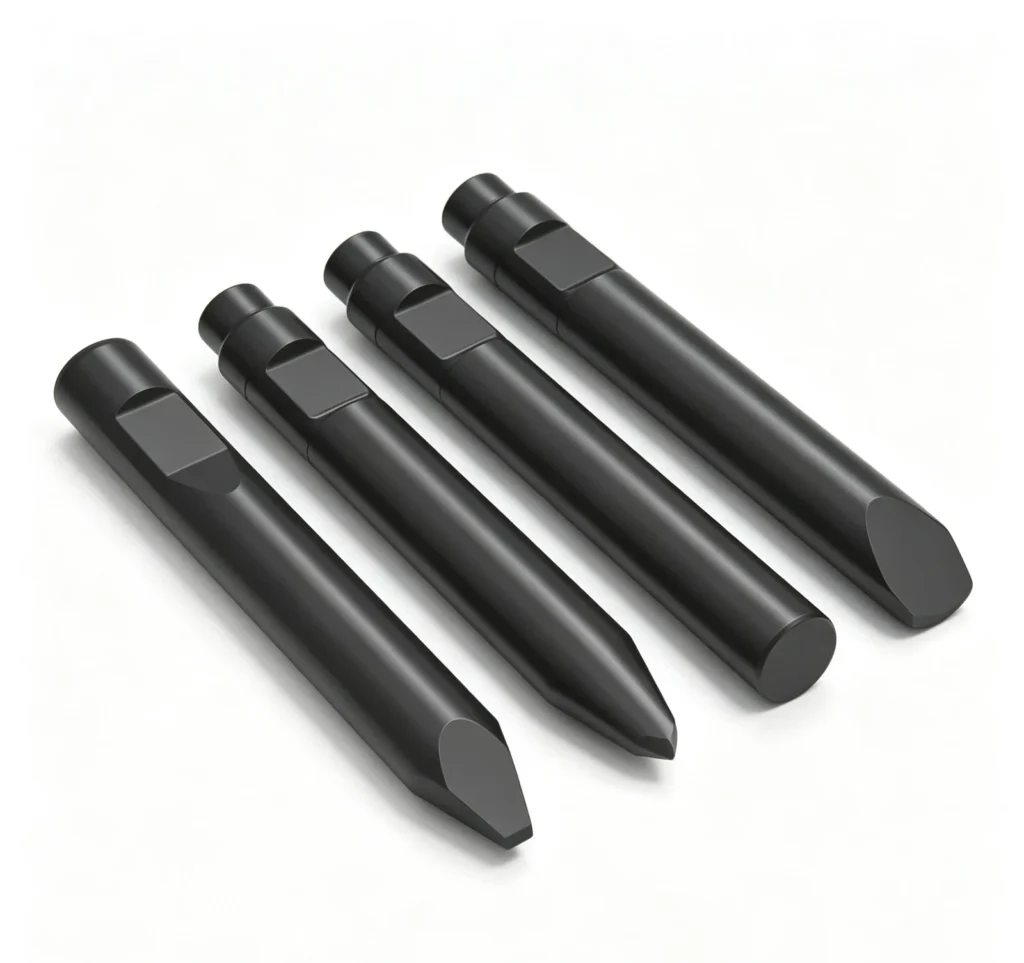
A photograph of the working tip helps describe its shape, but the connection end needs equal attention. Prepare the following views from existing records or an accessible, safely stored component. If important features remain hidden, ask your service provider for the missing information.
- One full-length side view, with the complete tool visible.
- A second side view showing features hidden in the first image.
- A close view of the upper shank and each visible retaining groove, flat or recess.
- A clear view of the upper end and a separate view of the working tip.
- Close photographs of part numbers, markings and any visibly worn or damaged areas.
Label the measurements and their reference points
Keep the original photographs and add a separate annotated copy. Mark dimensions with simple labels such as A, B and C, then use those same labels in your message. Write the units beside every value and explain where each measurement starts and ends. A number without a reference point is difficult to compare.
Useful information may include the shank diameter at an identified location, existing overall length, and the position and dimensions of retaining features. The required dimensions depend on the tool design. Ask the supplier which details are still needed rather than assuming a universal measurement list.
Where an original drawing is available, send the complete sheet with its reference and revision visible. Keep a recorded measurement separate from a drawing dimension, even if the values appear similar. If a feature cannot be measured or identified confidently, mark it for confirmation instead of filling the field with an estimate.
Separate tool shape from its worn condition
Describe the working-end shape you are requesting and include a clear image or sketch. State whether the request is to replace the same item or to discuss a different shape for a new requirement. Keep that request separate from the connection dimensions, so the proposed working end and the proposed fitment can both be reviewed.
Explain whether the photographs show a new spare, a used tool or a broken component. A worn or shortened sample provides evidence about the existing item, but its present dimensions should not automatically become the requested new-tool dimensions. Where available, include the original drawing or catalog reference for comparison.
Browse NEWLAND’s chisels and rods page when preparing the product description, and keep each requested tool on its own inquiry line.
Confirm the proposed drawing before ordering
Ask for the proposed tool reference and a drawing or dimensioned specification covering the features being matched. Compare the stated breaker identity, shank, retaining features, working-end form and lengths with your records. Resolve differences in writing, including any uncertainty caused by wear, missing markings or an earlier equipment modification.
Complete the inquiry with quantity and delivery country. You can send NEWLAND your chisel identification details with the photographs and available references. An initial photo review is a starting point; the final product and fitment need confirmation against the reviewed configuration.
Questions buyers often ask
Is the chisel diameter enough to order a replacement?
No. Include the breaker identity and the connection features, then confirm the proposed specification. Two measurements that happen to match do not establish that all relevant features match.
What if I only have a photograph of the installed tool?
Send it with the breaker nameplate and explain what is unavailable. An installed view may leave the shank or retaining features hidden, so additional records or information from your service provider may be needed before a replacement can be confirmed.
Continue with the relevant product or guide
Hydraulic Breaker Chisels and Rods
Hydraulic Breaker Tool Replacement and Reconditioning
Hydraulic Breaker Chisel Types: Clarify the Shape You Want to Order