
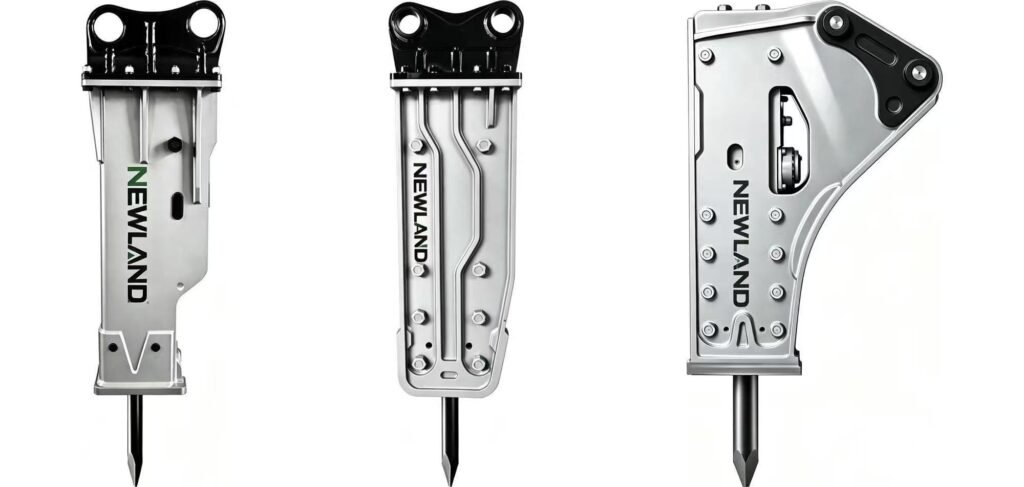
Confirm the setup that has actually been fitted
Check the breaker, bracket and coupler references against the authorised configuration, particularly after an attachment change. Carrier weight class alone does not confirm compatibility. The working tool and retaining components must also correspond to the breaker specification.
The operator should know how the particular coupler indicates and confirms secure engagement. A previous successful operation is not a substitute for the prescribed check after a change. Missing instructions, an unclear indicator or an unfamiliar retention arrangement must be resolved before use.
Look for condition changes without entering a hazard
Use the safe inspection position and isolated condition required by the equipment instructions. Look for visible cracks, missing components, abnormal hose routing, damaged protection, oil leakage and changes at the tool opening or mounting. Do not put a hand near a suspected pressurised leak.
A visual check cannot establish internal wear clearance or gas pressure. Those belong to the specified maintenance process. It can, however, identify a change from the known condition that warrants stopping rather than continuing until an internal failure occurs.
| Area | Question before work | Escalate when |
|---|---|---|
| Mounting and coupler | Is the approved connection securely confirmed? | Lock status, pins or bracket condition is uncertain |
| Hoses and connections | Is the visible condition and routing acceptable? | Damage, leakage, pinching or abnormal contact is seen |
| Tool and housing | Are components present and apparently intact? | Cracks, missing retainers or unusual movement are found |
| Carrier display | Are required checks complete without unresolved warnings? | A warning or abnormal operating indication remains |
Check the area as well as the attachment
Confirm the exclusion zone, visibility and planned position for the carrier. People must not enter the falling-fragment, crush or swing hazards. Ground conditions and access need to support the intended machine movement, including repositioning as the material is removed.
Check that dust, noise and flying-debris controls are part of the work plan. For structural work, the demolition sequence and stability assessment come before the breaker starts. A machine checklist cannot make an unassessed wall or unidentified service safe to strike.
Use a clear accept-or-stop record
A useful daily record identifies the machine and attachment, the person completing the check and any defect raised. Record an unresolved item as unresolved rather than copying a previous pass. The person responsible for the equipment should know who can authorise the correction and return to work.
When a defect requires parts, connect the order to the confirmed component reference. A complete pre-operation record makes it easier to distinguish a new symptom from an existing issue, while keeping operating decisions separate from a supplier’s quotation. Follow the prescribed check frequency for the actual model and site requirements.
A practical example is an attachment returned from another carrier. Its identification may be familiar, yet the bracket, hose ends or selected tool may have changed. Review those items against the current approved setup rather than signing the check because the breaker was previously used successfully. If the change cannot be verified at the start of the shift, the record should show a hold for clarification, with a named person responsible for resolving it.
Related products and guides
How to Use a Hydraulic Breaker: Operating Principles and Common Mistakes
Installing a Hydraulic Breaker: Mounting, Hose Identification and Handover Checks
Quick Coupler Compatibility: A Measurement Checklist Before You Order
Hydraulic Breaker Worksite Safety: Planning, Exposure and Stop Conditions