
Treat mounting and hydraulic supply as separate approvals
The bracket or coupler must suit the carrier linkage and breaker mounting, including pin geometry, engagement width and operating clearances. The complete installed weight and added offset also belong in the compatibility review. A physically attachable breaker is not automatically an approved installation.
The hydraulic review establishes the available controlled flow, pressure requirements and return path. Some configurations have additional drain, control or special-service connections. Determine these from the actual documents; the appearance or number of ports is not sufficient to identify them.
Hose identification must survive the installation
Hose assemblies need the correct size, pressure and temperature suitability, connection standard and fluid compatibility. Routing should accommodate the approved range of movement without unacceptable tension, abrasion or pinching. Mechanical fit at a fitting does not prove that the assembly has the required rating.
Identify supply, return and any additional lines according to the specific schematic. Do not use a generic left-right rule or assume that interchangeable-looking couplings serve the same purpose. Connection and pressure-release work belongs to trained personnel using the prescribed isolation procedure.
| Handover item | Evidence that should be available |
|---|---|
| Mechanical configuration | Breaker, bracket/coupler and carrier identification |
| Hydraulic arrangement | Applicable circuit requirements and verified connection identities |
| Commissioning checks | Recorded conditions, findings and acceptance reference |
| Operating information | Correct instructions and relevant configuration limitations |
| Open items | Named responsibility and resolution before release |
Commissioning should establish a baseline
A competent commissioning process checks the actual delivered conditions and system behavior using the required instruments and method. It should address more than whether impacts occur. Leaks, abnormal temperature behavior, restriction and unexpected movement need resolution before release.
Record the configuration in which checks were made. A later change of couplings, carrier settings, bracket or working tool can affect the validity of the original acceptance. Any adjustment needs an authorised reference rather than an undocumented attempt to improve performance.
For example, a handover that records only an auxiliary setting on the cab display leaves several questions open: was the delivered condition verified, which attachment was connected and what return arrangement was used? The record should make those facts distinguishable from the selected control value. This matters when the same carrier later receives another breaker or a replacement hose, because the earlier setting alone cannot demonstrate that the changed installation remains acceptable.
Give the operator a usable record
The final file should identify the installed components and include the applicable operating and maintenance information. It should explain any limitations relevant to the application and where to find the correct settings. Do not leave unresolved issues hidden in a technician’s personal notes.
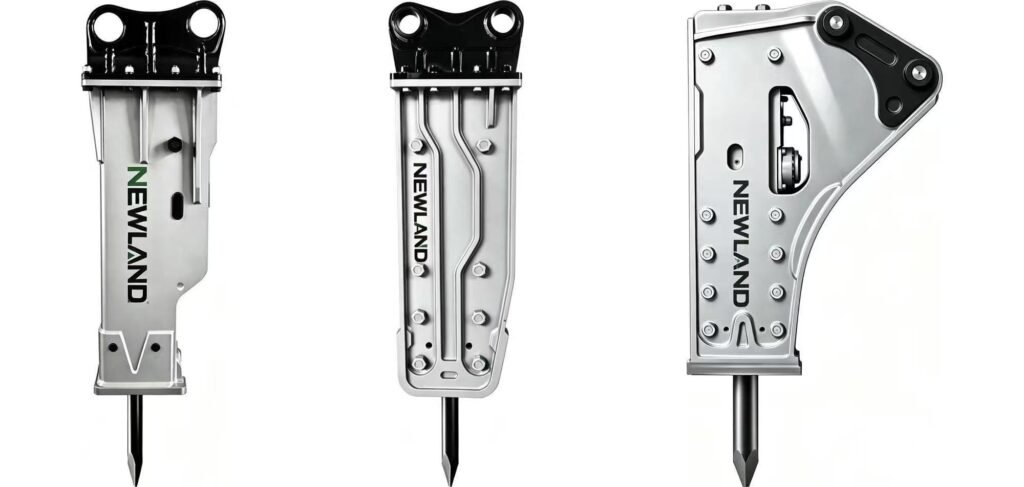
For NEWLAND supply, agree which mounting, hoses, controls and documentation form part of the order. Installation responsibility and site acceptance should also be clear. This article outlines the handover scope; it is not a universal fitting sequence, torque schedule or instruction to energise an unverified attachment.
Related products and guides
Hydraulic Breaker Mounting Dimensions: What to Measure Before Ordering
Hydraulic Breaker Flow, Pressure and Return Line Requirements
Hydraulic Breaker Hoses and Piping Kits
How to Use a Hydraulic Breaker: Operating Principles and Common Mistakes
Hydraulic Breaker Pre-Operation Checklist: What to Confirm Before Work
Hydraulic Breaker Worksite Safety: Planning, Exposure and Stop Conditions