
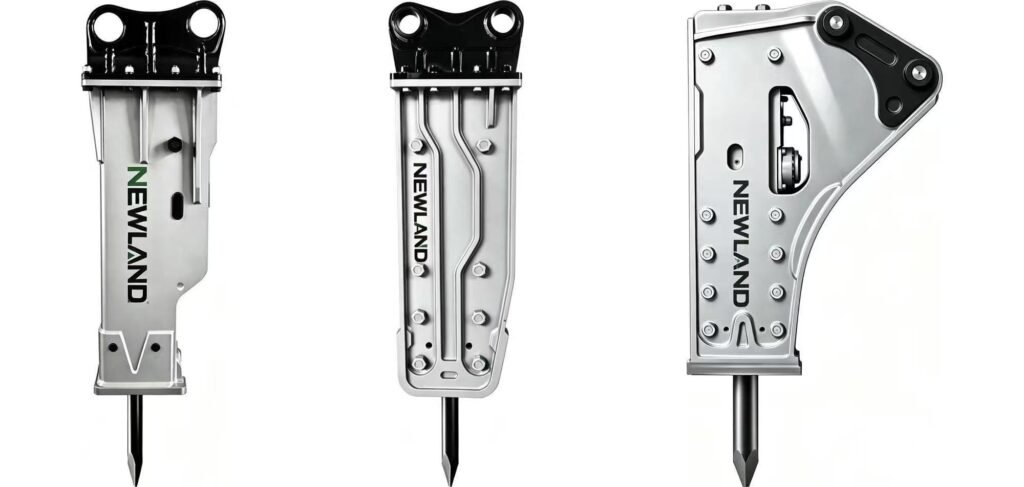
A hydraulic breaker price can describe very different purchasing proposals. One amount may cover a breaker alone; another may refer to a wider package with identified mounting components and documents. Before deciding which offer deserves further review, establish what each amount actually represents. The aim is to make the comparison clear enough to support a purchasing decision.
Define the product behind the price
Start with one common requirement. The proposals should refer to the same carrier configuration, intended application and requested supply scope. If one assumes direct mounting while another assumes an existing quick coupler, the totals are answering different questions.
Ask each proposal to identify its product reference and the corresponding specification or drawing. A photograph, a housing description or a broad carrier class leaves the configuration open. Our guide to choosing a hydraulic breaker explains the selection sequence. Use it to establish the technical basis; use this price guide to compare what is being offered against that basis.
Separate included items, exclusions and open questions
Build the comparison around scope rather than assumptions. A blank line is not the same as an included item. Likewise, an item described as available separately should not be treated as part of the quoted package. Keep the stated scope and your requested scope beside each other.
| Comparison area | What to establish |
|---|---|
| Breaker configuration | The identified product reference and its relevant documents. |
| Mounting arrangement | Which bracket, adapter or other requested mounting items are included, excluded or awaiting review. |
| Working tool | The tool description and whether it forms part of the offer. |
| Other requested items | Whether each requested connection component or spare part is quoted and available. |
| Supporting records | The documents promised with this particular supply. |
This table is a comparison structure, not a statement that NEWLAND supplies every listed item. Each requested component needs confirmation within the actual offer.
Put purchasing conditions on the same basis
Next, compare the commercial conditions attached to the configuration. Record the quoted quantity, currency, quotation validity and payment terms. Where a condition is missing, request clarification instead of assigning a convenient assumption.
Delivery wording also needs a defined boundary. Identify the named destination or handover point, the agreed delivery terms and any stated exclusions. Distinguish a requested arrival date from a confirmed commitment. Packing, transport, import charges and other destination expenses should be assigned to the responsible party where relevant to the agreed terms.
Do not combine different currencies, delivery boundaries or quantities into a single apparent saving. First obtain a comparable basis. This does not require inventing a standard price, a minimum order quantity or a universal lead time.
Compare proposals without filling in missing information
Consider the following invented comparison. Proposal A and Proposal B are labels for an illustration only; they do not represent real NEWLAND products, prices or quotations.
| Review point | Proposal A | Proposal B |
|---|---|---|
| Product and document reference | Identified | Not stated |
| Mounting scope | Explicitly described | Awaiting clarification |
| Delivery boundary | Named | Not stated |
| Compatibility review | Outstanding questions recorded | Status unclear |
Proposal A is easier to review because its statements and gaps are visible. That does not prove its technical suitability or make it the better purchase. Proposal B needs more information before a meaningful comparison is possible. Neither should be approved simply because its total looks attractive.
Resolve differences by requesting revised, identified offers. Preserve the earlier versions so your team can see whether a changed total reflects a changed configuration or a clarified commercial condition.
Use a repeatable comparison check
Before making a recommendation, have the purchasing reviewer answer these questions for every proposal:
- Are we comparing the same carrier requirement and application?
- Can every configuration reference be traced to the relevant offer and document?
- Are included items, exclusions and requested additions recorded separately?
- Are quantity, currency and delivery conditions comparable?
- Which technical and commercial questions remain unresolved?
- Has each revision been checked for a change in scope?
Keep longer term spending separate from the purchase price. Maintenance requirements, replacement parts and support questions can affect the purchasing assessment, but they should not be converted into unsupported savings claims. Review the NEWLAND supply and quality information and ask which records are available for the proposed product.
Request a quotation that can be reviewed
Browse the NEWLAND hydraulic breaker product types, then request a quotation for your carrier and project. Ask for a clearly identified configuration, a defined supply scope and a record of outstanding checks. If you need help organizing the initial request, use our product inquiry preparation guide. Compare the reviewed package before choosing an offer.
Continue with the relevant product or guide
Product Matching and Supply
Hydraulic Breaker Compliance and Inspection Documents
Hydraulic Breaker Total Cost of Ownership: A Buyer’s Checklist
How to Prepare a Product Inquiry