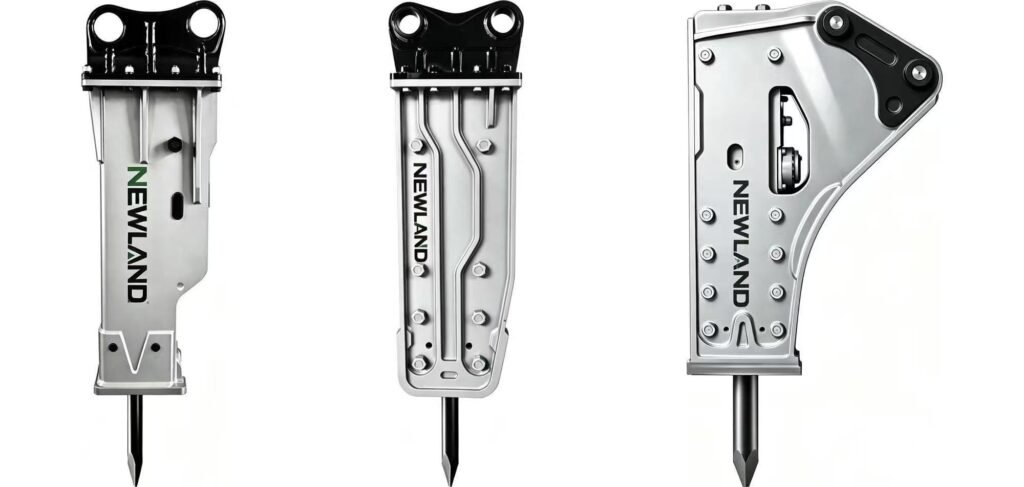
The NLB examples, carrier weight ranges and chisel diameters discussed here illustrate selected models only. Contact NEWLAND for other models and specifications.
Use carrier weight to build a shortlist
A hydraulic breaker sizing inquiry often starts with the excavator’s weight class. That is useful for narrowing the search, but it does not establish the complete match. The next question is whether the proposed breaker suits the machine’s hydraulic supply, attachment limits and mounting arrangement.
Build the inquiry around your own machine and work requirement. Record what is known, what evidence is available and what still needs checking. Keep a suggested breaker type provisional until the complete combination has been reviewed. A shortlist helps organize the discussion; it should not be presented as a confirmed specification.
Separate documented hydraulic data from assumptions
Request the relevant auxiliary-circuit information for your excavator, with its source. Record the available flow and pressure information as separate fields, including their units. An excavator’s headline specification or a figure copied from a different machine does not confirm what is available at your attachment circuit.
Send a clearly labeled document or photograph showing the information available for this machine. Preserve the field names, units and any qualifications instead of sending an isolated number. Ask which additional records are required for the proposed configuration. This is an inquiry review, not an instruction to change the machine’s hydraulic settings.
If a value has not been verified, mark it as unknown. A clear gap gives the supplier a specific question to resolve. An unlabelled estimate can make an incomplete inquiry look more certain than it is.
Check the complete mounting arrangement
Explain whether the breaker will be mounted directly or through an existing quick coupler. Include the coupler’s identity and any available adapter drawings, rather than describing the machine by weight alone.
List what the quotation needs to include: the breaker, bracket, working tool and any other mounting components being requested. Ask for a drawing and an identified specification for the complete proposal. Have any unresolved mounting or attachment-limit questions recorded before ordering. Our quick coupler compatibility checklist explains which interface details to collect.
Describe the work before discussing a model
A useful application brief says what material needs breaking and what result you need. State whether the work involves concrete demolition, trench excavation or rock size reduction. Add representative site photographs and explain access restrictions or project requirements that could affect the proposal.
Keep observations separate from conclusions. A photograph and a description of the material give the supplier something to review; a request for the biggest breaker in a weight class leaves important questions open. Browse the NEWLAND hydraulic breaker range for product types, then connect your inquiry to the actual job.
Send one complete inquiry checklist
Collect the following in one message. Attach documents where available, and label anything that still requires confirmation. This lets the supplier identify missing information before proposing a final configuration.
- Carrier manufacturer, full model designation and identification-plate photograph.
- Machine configuration and the manufacturer’s permitted attachment limits.
- Documented auxiliary flow and pressure information, with units and source.
- Direct mounting or quick coupler details, plus available bracket drawings.
- Material, intended work, representative photos and relevant site constraints.
- Delivery country, quantity and required project date.
Ask for a written compatibility review
Before accepting a quotation, ask it to identify the proposed breaker, the mounting components included, the relevant specification sheet and any outstanding compatibility checks. Make sure the review refers to your carrier model and configuration.
Keep the commercial and technical details together so a later change to the bracket or machine does not get lost. For the broader selection process, read our guide to choosing a hydraulic breaker. When your information is ready, send a breaker sizing inquiry to NEWLAND with the supporting documents.
Common questions about breaker sizing
Can I request an initial quote without hydraulic data?
Yes. Provide the exact carrier model and state that the hydraulic information is unconfirmed. Ask which documents are needed next, and keep the proposed configuration provisional until the missing information has been reviewed.
Does fitting the mounting pins confirm compatibility?
No. A mounting connection addresses only part of the assessment. The carrier’s attachment limits, the complete assembly and the hydraulic requirements still need to be checked for the proposed combination.
Continue with the relevant product or guide
How to Choose a Hydraulic Breaker
Hydraulic Breaker Matching for Special Carrier Setups
Mini Excavator Breaker Matching: When Is a Proposal Ready for Quote Review?
Apply carrier-weight screening to actual NLB models
The NLB40 detail page lists a 0.8–2.5 Ton excavator range, while NLB45 lists 1.2–3.0 Ton. Their ranges overlap, so carrier weight alone does not decide between them. Compare auxiliary flow, permitted attachment load and mounting measurements before confirming a proposal.
At the larger end, NLB160 lists 40–55 Ton and NLB165 lists 30–40 Ton. They meet only at the 40 Ton boundary; the model numbers do not describe a simple carrier-size ladder. Open each product page to compare its listed hydraulic values and reference weight.