
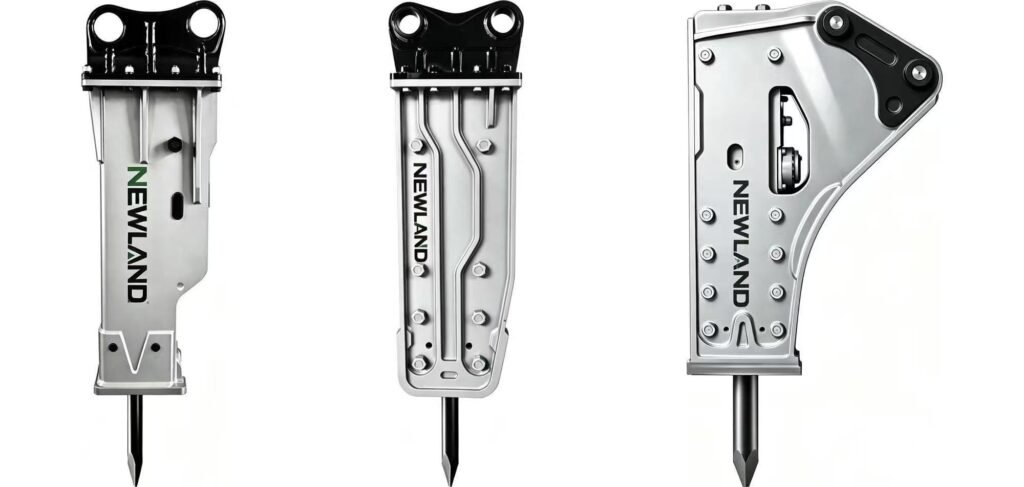
Begin with the exact item inspected
The record should identify the breaker or part, the relevant drawing or order revision and the date of inspection. Where serial or batch references are used, they should connect the report to the goods being shipped. A report for a similar model is background information, not evidence that the ordered item was inspected.
Check the assembly scope as well. A complete breaker, a main-body assembly and a separately supplied cylinder need different inspection coverage. If the quotation changes after inspection, determine whether the change affects the inspected configuration or requires an updated record.
Separate the three main kinds of checks
Visual checks can document apparent damage, identification and packing condition. Dimensional checks compare defined features with a drawing or tolerance. Functional checks address behavior under stated test conditions. Passing one category does not imply that every other category has been covered.
For any measured result, the report needs an intelligible unit and acceptance reference. A number without a measurement location, method or limit is difficult to evaluate. Photographs can show a feature or instrument reading, but they do not replace the missing context.
| Record section | Useful detail | Limit of the evidence |
|---|---|---|
| Visual inspection | Identified item, checked surfaces and findings | Does not prove hidden material properties |
| Dimensional inspection | Feature, drawing revision, unit and result | Does not establish hydraulic performance |
| Functional check | Setup, relevant conditions and recorded outcome | Does not guarantee every field application |
| Packing check | Contents, protection and package references | Does not replace product acceptance |
Read exceptions as carefully as passes
An open item should state what was found, which requirement it affects and how the parties will resolve it. Rework, replacement or agreed acceptance should be documented with an appropriate follow-up. A final report should not quietly omit a previously recorded discrepancy.
If an inspection was based on a sample, clarify the sampling scope. If a check was not performed, mark it as not performed rather than interpreting a blank cell as a pass. The buyer can then decide whether more evidence is needed before shipment.
For example, a report may show a mounting dimension as acceptable while the quotation refers to a revised bracket. Before acceptance, establish whether the measured bracket is the final one and whether the drawing references agree. The issue is not solved by adding more photographs of an unidentified assembly. A short, traceable correction to the record is more useful than a large report whose product identity remains uncertain.
Agree evidence before the goods are ready
Define required inspection documents while confirming the order. Include the key interface dimensions, package contents and any specified material or test records. This is more effective than requesting an unspecified certificate after the product has been packed.
NEWLAND’s inspection document package should be confirmed for the actual order. This guide does not represent a completed test report or claim a particular laboratory, inspection instrument or test result. Keep the accepted record together with the final quotation and packing list so that incoming checks can refer to the same product definition.