A suitable breaker is a complete attachment match
Choose a skid steer hydraulic breaker by reviewing three connected items: the breaker and mounting arrangement, the carrier’s auxiliary circuit, and the carrier’s approved operating limits. A unit may appear to connect mechanically while still needing a different hydraulic arrangement. Conversely, compatible hydraulic figures do not confirm that its plate and locking features fit the machine.
Begin with the exact carrier identification and the attachment information in its documentation. Machine family names are often too broad to identify installed options. Record any changes to the auxiliary circuit or attachment interface so that the review reflects the machine that will actually be used.
Read the auxiliary circuit information correctly
The relevant flow is the flow available to the attachment under the specified operating conditions. A machine’s total pump figure may not describe what reaches the breaker. If documentation lists more than one flow mode, identify the intended mode rather than assuming the largest value is appropriate.
Pressure terminology also matters. A maximum system or relief figure is not automatically the breaker’s operating pressure. Return-line requirements and connection restrictions must be checked alongside the supply side. Any measurements or adjustments belong with a qualified technician using the applicable machine and attachment procedures.
| Information | What to establish |
|---|---|
| Auxiliary flow | Available attachment flow and the operating mode used |
| Pressure data | Whether the figure is working pressure, a limit or a relief setting |
| Return connection | The approved return arrangement and applicable restrictions |
| Attachment controls | How the required circuit function is selected and maintained |
Treat the mounting plate as a defined interface
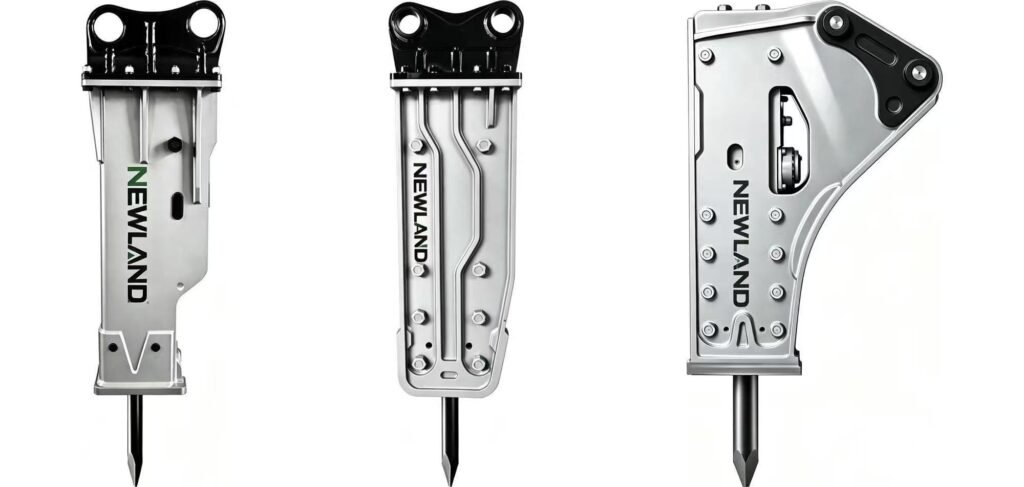
Identify the plate pattern, engagement features and locking arrangement. Photographs help explain the layout, but a controlled drawing is more reliable than judging fit from appearance. Include the complete breaker, plate and any adapter when reviewing attachment weight and clearance.
Hydraulic hose quick-disconnects are fluid connections. The mechanical attachment interface carries and retains the breaker. Calling both a quick coupler can hide two separate compatibility questions, so label each one clearly in the inquiry and in the final order.
Check the combined operating envelope
The mounting arrangement influences the position of the breaker relative to the carrier. Review clearance and hose routing throughout the intended range of movement using the approved installation process. A plate that locks in place does not establish unrestricted movement or permission to use every breaker weight.
A hypothetical buyer replacing a breaker while keeping an existing adapter should therefore identify both items. “Same machine as before” may miss a different adapter offset or an altered hose connection. This example explains the matching process and does not specify a universal installation design.
Compare offers on the same scope
Write down whether the offer includes the breaker, mounting plate, working tool, hoses and connection items. List any parts intended for reuse. Then compare each proposed configuration against the same carrier and application record. A lower price for a bare breaker cannot be compared directly with a complete attachment package.
The NEWLAND skid steer breaker range is the product starting point. For a matching review, pair the carrier identification with its auxiliary-circuit information and the mounting reference. Keep the confirmed combination with the order so later parts inquiries refer to the same assembly.
Related products and guides
Hydraulic Breakers for Skid Steers
Hydraulic Breaker Compatibility Checklist: Carrier, Oil Circuit and Mounting
Hydraulic Breaker Mounting Dimensions: What to Measure Before Ordering
How to Choose a Hydraulic Breaker
Mini Excavator Breaker Matching: When Is a Proposal Ready for Quote Review?