Separate tip shape from breaker fit
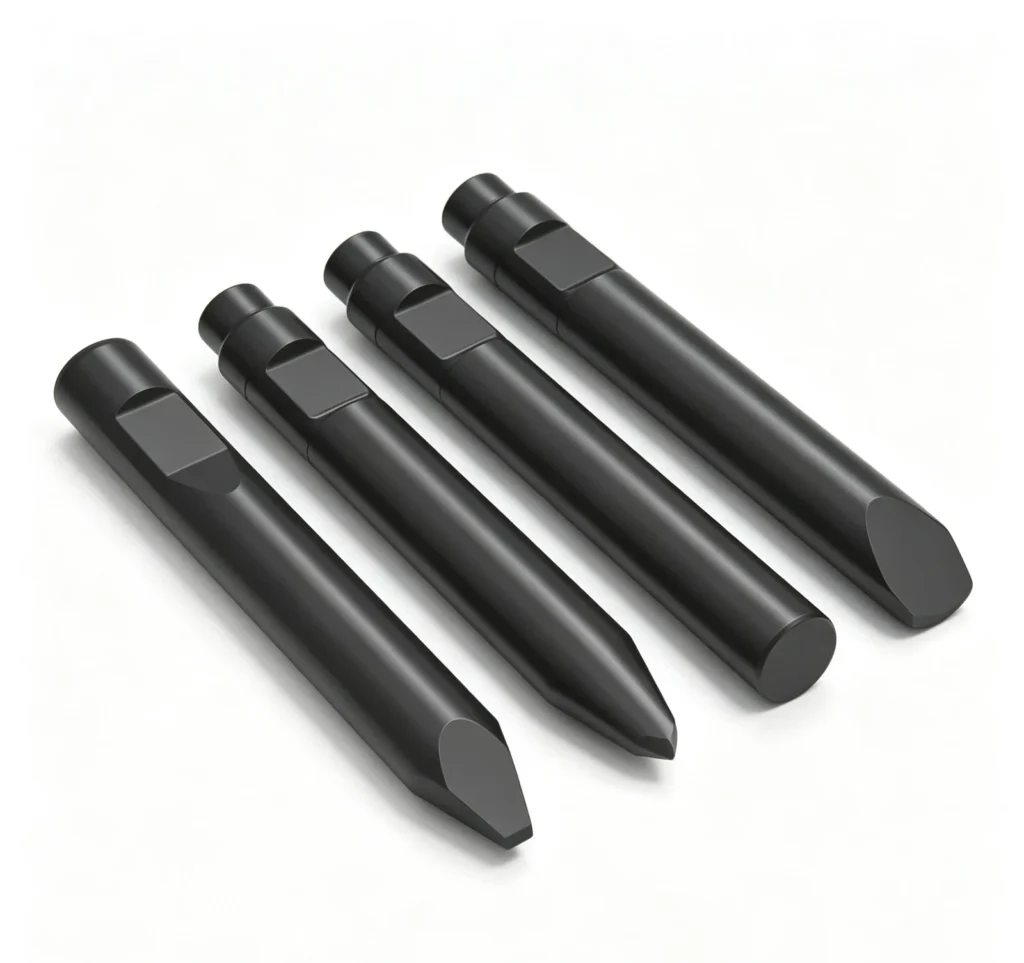
A hydraulic breaker chisel type usually describes the working end of the tool, while fitment depends on the shank and its relationship with the breaker. Two tools can have a similar pointed end but different diameters, lengths or retaining features. The name of the shape therefore cannot identify a replacement on its own.
Decide first whether you are ordering the same tool again or considering a different working shape. A replacement needs the existing reference and fitment checks. A different shape adds a second question: whether that tool design is approved for the proposed breaker and task.
Use visible shape descriptions carefully
Terms such as flat and chisel are not always used consistently in commercial descriptions. A labeled image or drawing prevents a familiar word from hiding a different interpretation. The table explains terminology; it is not a universal performance ranking or an application approval.
| Description | What the words generally describe | What still needs confirmation |
|---|---|---|
| Point or moil point | A working end narrowing toward a point | Exact tip geometry and the complete tool reference |
| Chisel or wedge | A working end with an edge or wedge-like profile | Edge orientation, dimensions and approved application |
| Blunt | A working end without a pointed or cutting-edge tip | Face shape and intended breaking task |
| Special tool | A tool designed for a defined purpose | Compatibility, operating scope and the actual supplied design |
Describe what the material needs from the tool
State the material, its condition, the available access and the desired result. Those details help the technical review determine whether the proposed working shape is appropriate. Do not choose a tip solely because it looks more aggressive or because a similar-looking tool worked on another project.
Special working tools require a clearly defined purpose. A post-driving or compaction description should not be treated as permission to use an ordinary breaker chisel for that task. Identify the approved configuration and its limits before selecting a special tool.
Order the whole geometry, not just the tip
The order reference should connect the working-end shape with the shank drawing. Include the retaining detail, relevant lengths and any orientation requirements. A photograph should show the whole tool as well as the tip; a close-up of a worn end may no longer represent the original shape accurately.
For example, a hypothetical buyer requesting “the same diameter, pointed” has only described part of the tool. A different retaining arrangement could still prevent a match. Keeping the drawing and selected tip description together resolves both the fit question and the shape question.
Avoid using shape as a quality shortcut
Appearance does not establish material grade, heat treatment, service life or suitability for a particular duty. Those are separate product requirements and need their own support. Likewise, a worn or damaged end cannot reliably prove that the original tip type was wrong.
NEWLAND supplies hydraulic breaker working tools and special tool options within the confirmed product scope. Use the chisel identification guide when replacing an existing item, and provide the intended task when considering a different shape. The confirmed item reference should record both fitment and the chosen working-end design.
Related products and guides
Hydraulic Breaker Chisels and Rods
Hydraulic Breaker Chisel Identification: Photos and Measurements to Send
Special Working Tools for Hydraulic Breakers
Hydraulic Breaker Chisel Damage: Breakage, Mushrooming and the Next Inspection
Hydraulic Breaker Chisel Material: What to Confirm Before Comparing Tools