
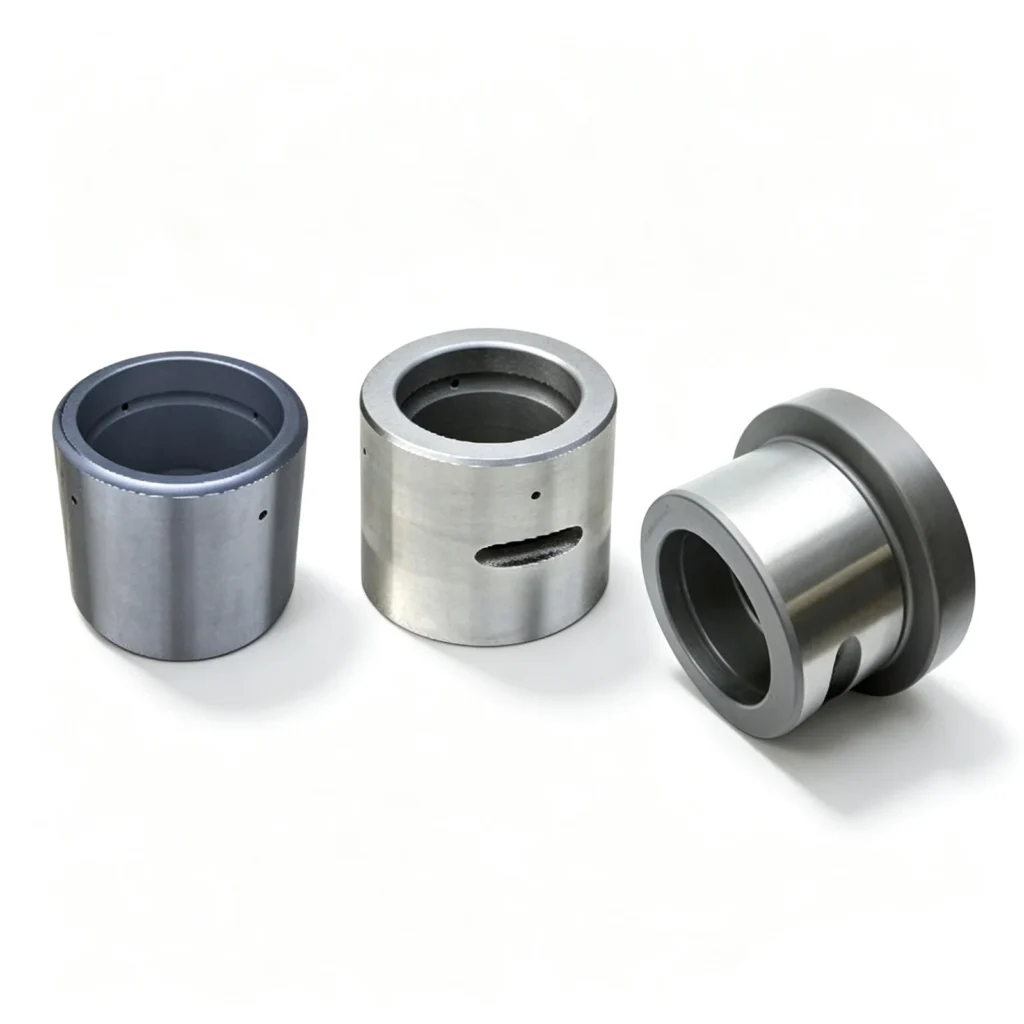
Identify the position before requesting a size
A breaker may use different guide components at different positions, with distinct lengths, outside profiles or retaining features. Terms such as front bushing, lower bushing and tool bushing are not enough without confirming how the particular parts drawing uses them.
Use the breaker reference and the drawing position to establish the required item. If a kit is requested, specify what it contains. A quotation for one guide is not automatically a complete bushing set, even where the parts share a similar internal diameter.
The inside and outside interfaces both matter
The internal geometry relates to the working tool, while the external geometry relates to the housing and retention arrangement. Overall length, shoulders, grooves or other features may determine the installed position. A bushing that accepts the tool can still be wrong for the housing.
Finished material condition and the specified fit are also part of the component definition. Do not use extra force, improvised machining or a guessed oversize part to compensate for an unidentified fit problem. Resolve the correct drawing and condition first.
| Measurement or reference | Identification purpose | Condition question |
|---|---|---|
| Drawing position and revision | Which guide component is required? | Is the correct component installed? |
| Internal diameter and location | Which tool interface does it match? | Is wear acceptable under the actual limit? |
| External profile and length | How does it fit and locate in the housing? | Is the housing interface damaged? |
| Tool condition | Which mating tool is in use? | Would a worn tool distort the clearance assessment? |
One diameter does not describe uneven wear
A worn bore can differ along its length or around its circumference. The measurement method should therefore follow the specified locations and directions, using suitable instruments. The technician should also inspect the tool so that clearance is not attributed to the bushing alone.
Keep identification readings separate from acceptance readings. A measurement from an old part is not automatically the nominal manufacturing size, and a photograph cannot establish roundness or the required precision. No universal wear clearance applies to every breaker design.
For example, a tool can show increased movement because the bushing is worn, the tool shank is worn or both have changed. Measuring only the bushing and ordering a new one can leave part of the clearance problem untouched. Record the mating tool condition and the specified measuring locations together. If the wear is strongly uneven, the technical review should also consider why the loading or alignment has differed across the guide, instead of treating the largest reading as the entire diagnosis.
Replace the guide within a sound interface
When wear is confirmed, assess whether the tool and housing features remain serviceable. Abnormal loading or damaged retention may require a wider correction than a fresh bushing. A replacement should restore the intended assembly, not simply reduce visible play temporarily.
For NEWLAND supply, state the guide position, component reference, tool size and requested set coverage. Include the technical findings where there is uncertainty about the mating parts. Installation method and final service acceptance must follow the applicable requirements, including the approved fit and any model-specific assembly checks.
Related products and guides
Hydraulic Breaker Bushings
Hydraulic Breaker Chisel Identification: Photos and Measurements to Send
Breaker Bushings, Retaining Pins and Through Bolts: Which Part Are You Requesting?
How to Identify Hydraulic Breaker Parts
Hydraulic Breaker Through Bolt Replacement: A Parts Matching Checklist