
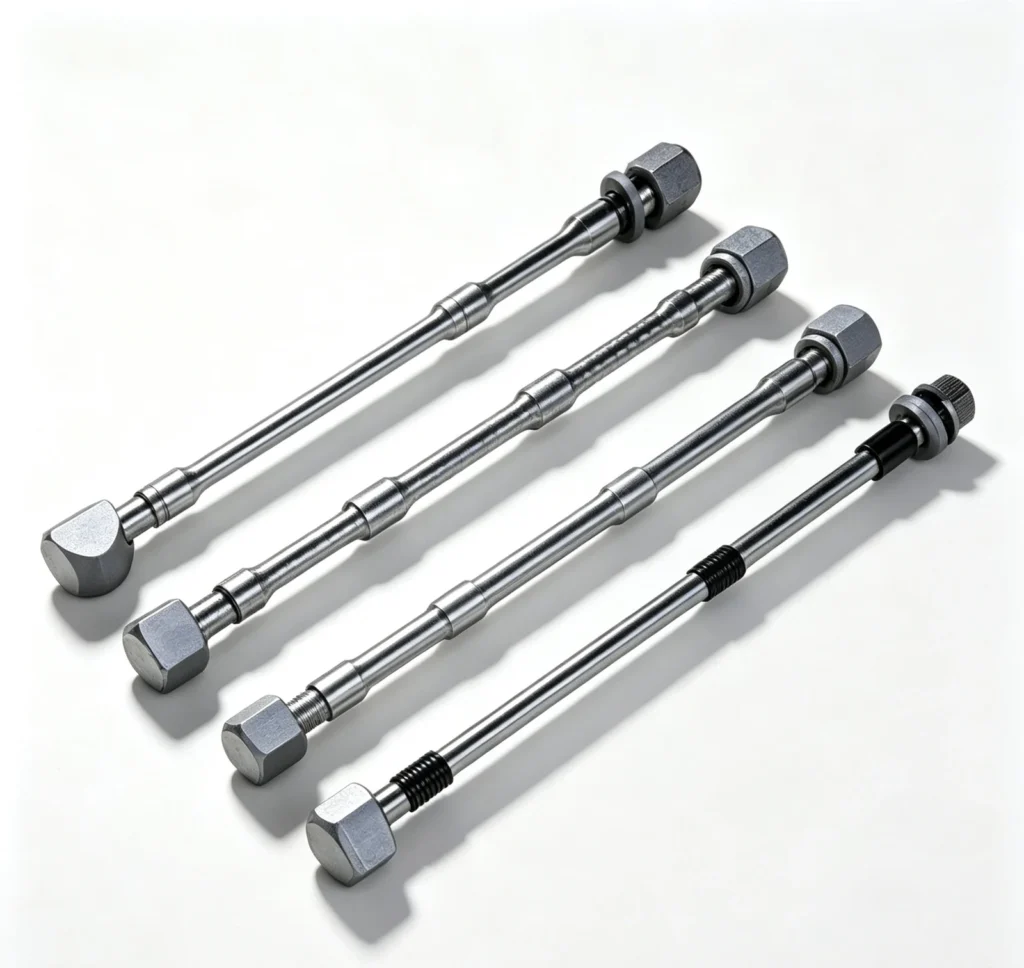
Why a similar-looking bolt can be wrong
A through bolt’s length, thread, shank geometry, material condition and bearing arrangement can affect its function. Thread engagement and the relationship to nuts or washers also matter. Matching an outside diameter does not establish that a substitute is suitable for repeated impact loading.
The component reference should be tied to the breaker assembly and revision. Where the design specifies a set or matched accessories, clarify the complete supply requirement. Do not substitute an ordinary threaded rod or an unverified nut because it screws on successfully.
A bolt failure can be a joint problem
The joint must maintain its intended clamping condition during service. Incorrect preload, damaged seating surfaces, an assembly mismatch or component damage can affect that condition. The fracture location and surrounding evidence may therefore be relevant to more than the failed bolt itself.
Review the mating surfaces, threads and remaining components under the applicable service procedure. Do not assume that tightening the surviving bolts makes the assembly ready to run. A broken fastener may have allowed movement or loading that needs further inspection.
| Item to confirm | Reason |
|---|---|
| Bolt and accessory references | Defines the intended clamped assembly |
| Thread and engagement geometry | Prevents reliance on diameter alone |
| Bearing and seating condition | Affects how assembly loads are transferred |
| Specified assembly method | Determines how the required clamping condition is achieved |
| Failure and inspection record | Helps address repeat loosening or fracture |
Do not copy torque from a generic chart
Applied torque is not the same as bolt preload. Friction at threads and bearing surfaces, lubrication and the joint configuration affect the relationship. A generic torque value can therefore produce a different result from the intended assembly condition.
Use the exact service requirements for the component, including any sequence, lubricant, tools and replacement rules. Do not increase a setting to compensate for recurring loosening without understanding the cause. Improvised welding or locking methods can introduce further uncertainty into an impact-loaded joint.
An example is a replacement bolt offered with the correct overall length but a different threaded length or nut arrangement. It should not be accepted as equivalent until the actual joint requirements have been checked. The same caution applies when an assembly was previously modified or contains mixed accessories. Restoring the specified set may be part of the repair, but the technician must also establish that the joint surfaces and retained components remain suitable before assembly.
Define replacement and return-to-work acceptance
A competent technical decision should establish which bolts and accessories must be renewed, which mating components remain acceptable and what checks complete the repair. Whether individual or set replacement is appropriate depends on the actual design and findings, not a universal rule.
For NEWLAND supply, identify the breaker, bolt reference, assembly position and required included items. Keep material or inspection requirements explicit in the quotation if they are part of acceptance. The repaired assembly should return to work only after the prescribed assembly and verification have been completed.
Related products and guides
Hydraulic Breaker Through Bolts
Breaker Bushings, Retaining Pins and Through Bolts: Which Part Are You Requesting?
Hydraulic Breaker Repair or Replacement: Decide the Scope Before Ordering Parts
How to Identify Hydraulic Breaker Parts
Hydraulic Breaker Tool Pin Seizure: What Must Be Checked Before Replacement
Matching Hydraulic Breaker Bushings: Position, Drawing and Measurements