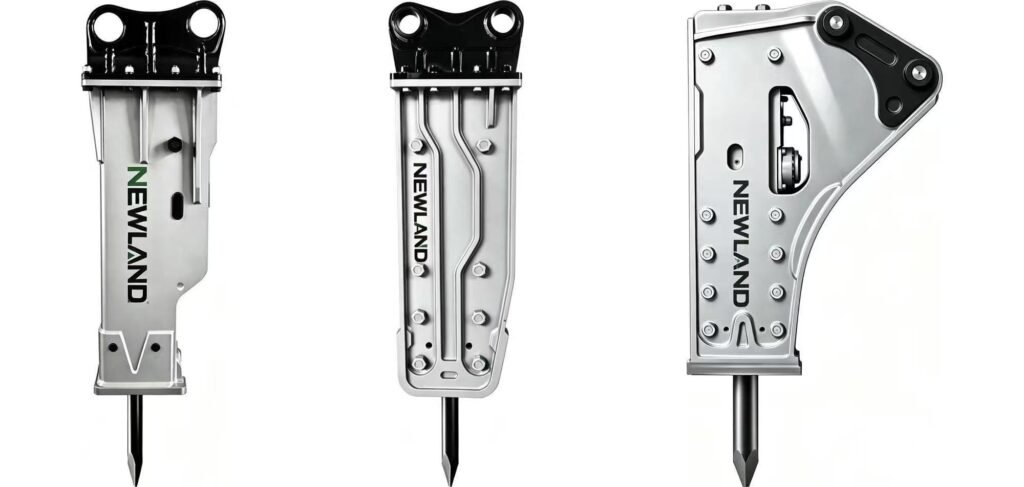
The NLB examples, carrier weight ranges and chisel diameters discussed here illustrate selected models only. Contact NEWLAND for other models and specifications.
Flow and pressure answer different questions
Hydraulic flow describes a volume of oil moving per unit of time. Pressure describes the loading within the hydraulic circuit. Both are relevant to a breaker, but neither is a complete performance statement. The carrier must supply the attachment within the operating requirements of the actual breaker configuration.
A useful technical sheet identifies units, conditions and whether a value is a requirement, an operating range or a limit. Do not compare two numbers simply because they appear in adjacent catalog columns. The definitions need to match before the values can be meaningfully compared.
Read the label attached to the pressure figure
The table explains the distinctions, not a setting procedure. Actual definitions and limits must come from the applicable documentation. An apparently adequate maximum pressure does not establish a correctly configured attachment circuit.
| Term | What it describes | Frequent misunderstanding |
|---|---|---|
| Operating pressure | A stated operating condition for the equipment | Treating it as a universal adjustment target |
| Relief setting | The specified setting associated with circuit protection | Assuming it equals pressure during all work |
| Component rating | A limit or rating for a particular component | Using it to approve the complete system |
| Return pressure or backpressure | Pressure associated with the return side under stated conditions | Assuming the return side is always unrestricted |
Use attachment-circuit flow, not a general pump headline
The carrier information needed for matching is the flow available to the attachment in the intended operating mode. A total pump-output figure can describe a different condition. Where a carrier has selectable modes, the mode forms part of the compatibility record.
Continuous flow describes how the circuit function can be maintained; it does not identify an acceptable flow value for every breaker. Similarly, the presence of two hydraulic connections does not by itself describe the permitted direction or return arrangement. The circuit function and connection identification need to be clear.
Give the return path equal attention
Return conditions can be affected by the circuit arrangement and the restrictions in the flow path. Review the specified return connection, hoses and fittings as part of the complete installation. A connection that physically joins two hoses has answered a fit question, not the full hydraulic question.
Do not infer permission to add a return connection or alter the circuit from a generic diagram. The appropriate arrangement is the one approved for the carrier and breaker combination. Live testing, fault finding and adjustment require competent personnel using the prescribed procedures.
Compare records under the same conditions
Keep the document source, units, operating mode and relevant test conditions with each figure. A measurement without those details can be difficult to interpret. If the carrier record and breaker sheet use different units or terminology, resolve that difference before treating the combination as confirmed.
In a hypothetical review, one document might list a relief setting while another lists a breaker operating requirement. The numbers cannot be accepted as a match merely because they look close. The correct next step is to establish their meanings and the actual circuit condition, not to adjust the machine toward the catalog figure.
Use NEWLAND’s compatibility checklist to bring the circuit information together with the carrier and mounting details. The breaker specification guide then explains the separate impact and power terms used to describe the attachment itself.
Read the NLB flow and operating-pressure ranges together
NLB120 lists required oil flow of 115–150 L/min and operating pressure of 160–180 bar. NLB125 lists 90–120 L/min and 150–170 bar. Although their excavator ranges overlap between 15 and 18 Ton, those hydraulic rows are different.
For an illustrative circuit delivering 130 L/min in the documented attachment mode, the flow falls inside the NLB120 range and above the NLB125 range. This checks one specification only. Carrier operating conditions, mounting, attachment mass and the approved return arrangement still determine whether a complete installation is suitable.
Compare NLB hydraulic requirements
Related products and guides
Hydraulic Breaker Compatibility Checklist: Carrier, Oil Circuit and Mounting
Hydraulic Breaker Impact, Power and Specification Terms Explained
How Does a Hydraulic Breaker Work? Main Components and the Impact Cycle
How to Choose a Hydraulic Breaker
NEWLAND Hydraulic Breaker Videos
Hydraulic Breaker Terminology: A Buyer’s Glossary
Hydraulic Breaker Hoses and Piping Kits