
Define the complete combination first
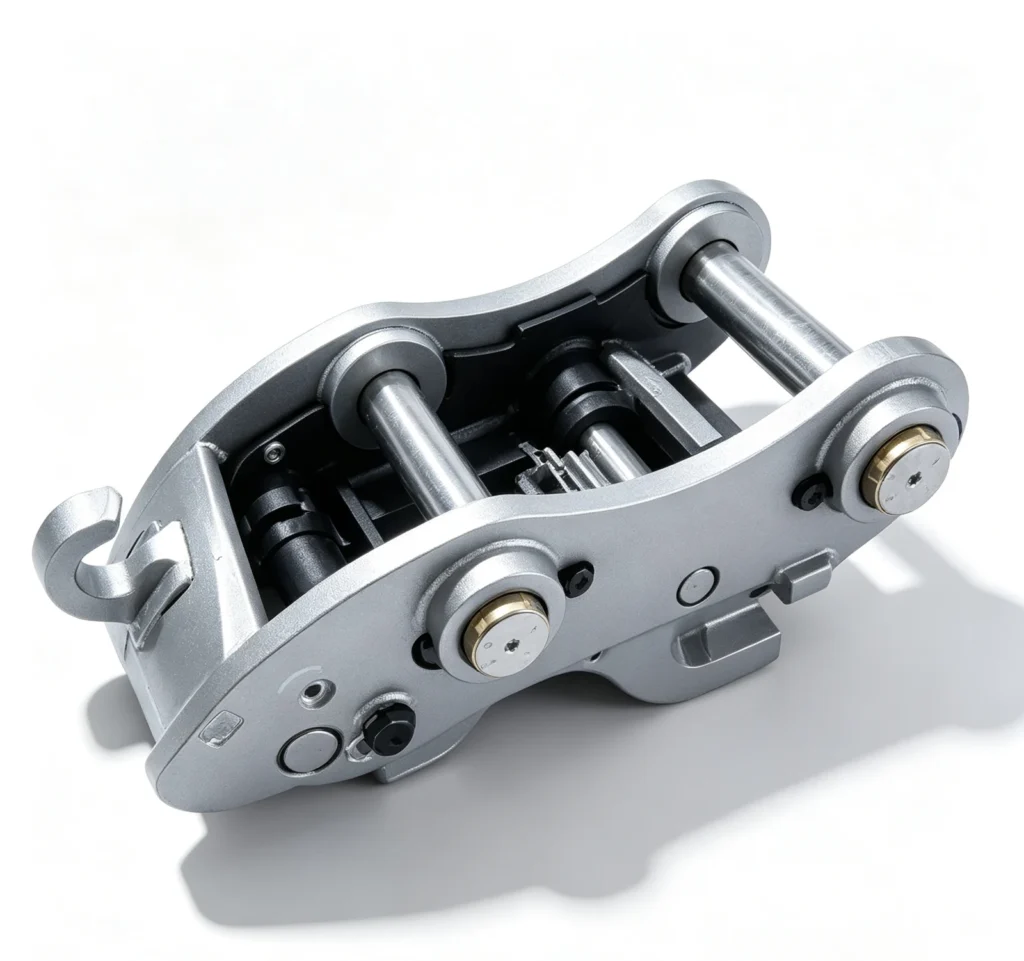
Using a hydraulic breaker with a quick coupler requires an approved match between the carrier, coupler and breaker mounting arrangement. The coupler’s carrier-side fit and attachment-side fit are separate interfaces. Identify both before assuming that a breaker suitable for the carrier will also suit the proposed coupler.
Write the configuration as a chain: carrier, coupler, any adapter, breaker bracket and breaker. Then mark which items already exist and which will be supplied. This simple record prevents two parties from checking different assemblies while believing they are discussing the same order.
Decide what will be reused
Reusing an existing coupler can affect the required bracket or adapter and the assembly geometry. Reusing an existing breaker while adding a coupler can change the same details. Neither case should be described only as a breaker replacement or a coupler purchase without identifying the retained components.
| Purchase situation | What needs a clear reference |
|---|---|
| New breaker with existing coupler | Existing coupler identification and attachment-side interface |
| New coupler with existing breaker | Breaker bracket drawing and the required coupler connection |
| New complete assembly | All interfaces, complete attachment scope and carrier review |
| Adapter added to an existing assembly | Both adapter interfaces and the resulting assembly geometry |
Keep mounting approval and hydraulic suitability separate
The mechanical coupler retains the attachment. Hydraulic hoses and fluid connections supply the breaker. A suitable mechanical connection does not establish that the auxiliary circuit meets the breaker requirements, and a hydraulic quick-disconnect is not the same item as an excavator quick coupler.
If the coupler itself uses a hydraulic locking circuit, identify that requirement separately from the breaker supply circuit. Avoid a quotation line that says only “hydraulic connections included” without naming which connections it covers. This is an order-definition question, not a request to improvise an installation.
Review weight, clearance and retention as an assembly
The complete attachment includes all connection components. The carrier review must use that combination rather than a bare breaker weight alone. Added components can also change reach and clearances, so the intended working envelope needs review against the approved configuration.
The locking arrangement and connection-verification procedure must be the ones applicable to the actual coupler. Installation, engagement and testing should be completed by competent personnel following the supplied instructions. A visual similarity to a previous coupler is not evidence that its locking procedure is identical.
Make the quotation describe a usable scope
Confirm whether pins, brackets, adapters, hoses, fittings and the relevant instructions are included or retained from the existing assembly. Record any items to be supplied by the buyer. A clear division of responsibility allows the complete combination to be checked before dispatch rather than at the worksite.
NEWLAND supplies quick couplers and hydraulic breakers. Use the coupler compatibility article for interface measurements and the breaker mounting guide for assembly drawings. The final order should identify the agreed combination and any open installation requirements, keeping mechanical fit and hydraulic approval visible as separate decisions.
Related products and guides
Excavator Quick Couplers
Quick Coupler Compatibility: A Measurement Checklist Before You Order
Hydraulic Breaker Mounting Dimensions: What to Measure Before Ordering
Hydraulic Breaker Compatibility Checklist: Carrier, Oil Circuit and Mounting
Hydraulic Breaker Quick Coupler Problems: Describe the Connection Before Inspection
Manual and Hydraulic Quick Couplers: What to Compare Before Ordering